

SILICA GEL
Silica gel is an amorphous form of silicon dioxide, which is synthetically produced in the form of hard irregular granules hard regular beads. Silica gel can adsorb about 40 % of its weight in moisture and can take the relative humidity in a closed container. Even when saturated with water vapour, silica gel still has the appearance of a dry product, its shape unchanged. It is non-corrosive, odorless, tasteless, non-toxic, and chemically inert
Benefits of USFDA Approved Silica Gel Packets
SAFETY AND QUALITY
The USFDA approval signifies that DMF grade silica gel packets meet the highest safety and quality standards.
COMPLIANCE WITH REGULATORY STANDARDS
Food and pharmaceutical industries, demand adherence to specific regulations to ensure consumer safety.

Pharmaceutical
Silica Gel that help prolong the stability and effectiveness of medications beyond their initial expiration date

Foods
To keep food fresh and crispy, store snacks in airtight containers, use vacuum sealers, and avoid covering hot, fried food

General type
To protects cargo during storage and transit to prevent damage from condensation (container rain), mold, mildew, and rust.
Primary type of Silica Gel


White Silica Gel
Silica gel white, the are not impregnated with any indicating agent. When moisture-free these beads or crystal appear to be transparent. Upon moisture saturation, they turn milky or hazy white
Blue Silica Gel
Silica gel blue, are impregnated with an indicating agent called cobalt chloride. The cobalt chloride gives these bead/crystals a deep-blue color that upon reaching adsorption capacity changes into pink color.
Blue silica gel contains cobalt chloride, which is classified as a possible human carcinogen
Orange Silica Gel
Silica gel orange, are impregnated with an indicating agent called methyl-violet that gives the color orange to it. Once these beads or crystals reach the maximum adsorption capacity, the orange color turns into green. Orange silica gel is non-toxic and Eco-friendly product
Shop Online You Need


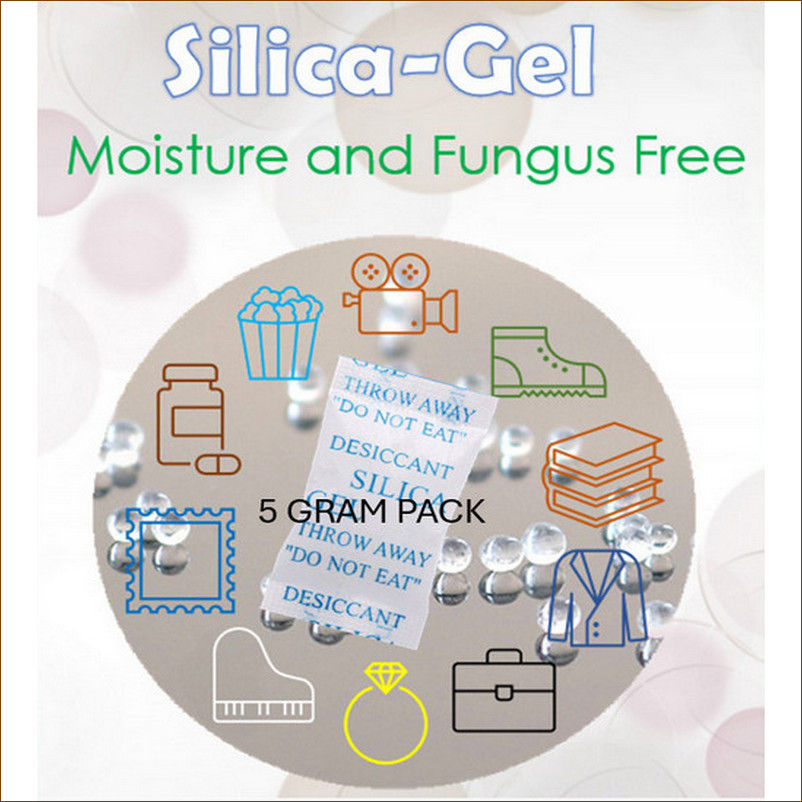


USFDA approved Silica Gel
for Pharmaceutical and Food industries
By controlling the relative humidity (RH) inside the package or delivery system, water content and water activity (aW) can be stabilized and chemical hydrolysis reduced, preserving healthcare products within stability parameters throughout shelf life